Who's Who

Executive Committee
Secretariat

Fellows


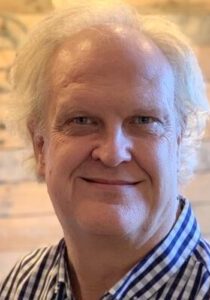
Adrian Bishop-Lagget MIPS

President

As a Sound Supervisor at BBC Television Adrian specialised in music balancing for LE and Music & Arts programmes. On the formation of the IBS he was appointed Chairman, a post he held until 1985 when he was elected President. He led the group that developed the Skillset standards in sound, and in 1992 left the BBC to become Publishing Manager of Line Up.

^ top

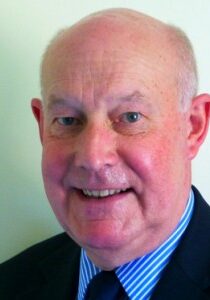
John Andrews BSc MIPS

Vice President

John began his career in EMI’s Research Labs before joining the BBC as a Studio Manager in 1962. After mixing and broadcasting 1960s pop groups and bands and training Radio 2 SMs (and management!) for the introduction of stereo, he moved to EMI Audio-Visual for four years, and then joined Alice (Stancoil Ltd). In 1986 he was appointed Sales & Marketing Director at Neve Electronics, and in 1993 he went freelance, writing for IBE, Broadcast Hardware, Line Up and Audio Media and consulting for several audio companies. John was Marketing Director of Solid State Logic from 1997 to 2001, and was elected Chairman of the Institute of Broadcast Sound in 1998, retiring in 2007.

^ top

Executive Committee

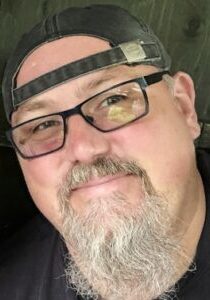
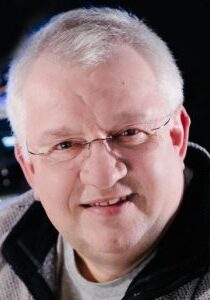
Simon BishopSimon Bishop MIPS

Director, Chairman

Simon recorded his first sounds at age 9, and is still learning to this day. He recorded his first music LP at the age of 15, and started working professionally 4 years later. His career has taken him through Corporate, Commercial, and Training film making, Pop Promos and long form music docos. About ten years ago Simon started recording for TV drama and feature films, and more recently has sound supervised a number of reality and actuality TV shows. He has recorded the last four series of New tricks, for the BBC. Simon became Chairman of the IPS in March 2009.

^ top

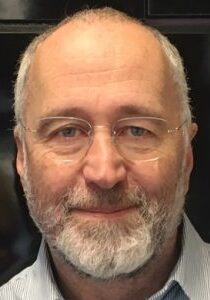
Bob Conduct

Bob Conduct MIPS

Director, EC Secretary

Bob joined the BBC as a Technical Operator. He has worked as a Sound Balancer specialising in sessions - working with John Peel he has engineered many top bands. He later worked on studio re-furbs, with Neve on the development of the DSP, and was instrumental in the design of the first BBC direct-to-air studios. Bob became a freelance Consultant in 1996

^ top

Simon ClarkSimon Clark MIPS

Director,Treasurer

Hooked on the process of recording and reproducing sound from the age of 10 when my father brought home a Philips reel to reel machine, I started my professional life in post production, moving through equipment rental at AKA Film Services to finally go freelance in the location world in the mid 1980s. Since the late 1990s I have worked almost exclusively on TV Dramas but any aspect of recording fascinates me. I am lucky enough to love my job and still learn things every time I go to work.

^ top

Gary ClarkeGary Clarke MIPS

Director

Gary Clarke is a Sound Supervisor in BBC Resources, specialising in programmes such as Strictly Come Dancing, Sport Relief and other Saturday night programmes. His 28 years in the industry have also included music/LE programmes for many independent and broadcasters and large scale events for BBC Sport and others, including the Winter Olympics in Turin, the Commonwealth Games in Melbourne, and the Olympics and Paralympics in Athens and most recently Beijing.

Gary spent many years acquiring and dubbing EastEnders, is part of a team that specifies desks and comms systems for BBC Resources, and was nominated at the RTS and BAFTA in 2007 for Strictly Come Dancing.

^ top

Mike Felton MIPS

Director

Mike is a founding member of the IBS. He had a thorough grounding in TV drama and LE shows and moved to specialise in music shows. Mike has now worked on over 270 "Later... with Jools" and counting. Mike retired from the BBC after 42 years and now works freelance on Later with Jools and location concerts e.g. Union Chapel, LSO St Lukes, Mercury music prize and Glastonbury festivals. Mike's current interest is surround for HD.

^ top

Pete Freshney MIPS

Director

Pete's background is with the BBC Transcription Recording Unit, where he spent 25 years mixing all sorts of music and the odd quiz show. 10 years ago he built a small multitrack mobile (As the Crow Flies) and has been precariously, but happily, freelance ever since.

^ top

Keith Graham

Keith Graham BSc MIPS

Director, Membership Secretary

Keith is a senior studio manager at the BBC, currently working in Radio Drama. For over 25 years he has worked on numerous L.E .shows, Drama, Sport, News and Current Affairs programmmes. Along the way he has beeen awarded a Bafta for "The Dark House", Sony Gold for Drama and a few Prix Italia's awards for his sound recordings and mixes.

^ top

Chris MacleanChris Maclean MIPS

Director

Chris joined the BBC in 1988 as a Studio Manager working in Broadcasting House. He specialised in music recording and documentaries, producing many sessions for John Peel, Andy Kershaw, The Evening Session etc. as well as mixing many award winning docs.

In 1998 Chris started working for The Jungle Group mixing commercials for radio, TV and cinema. He also mixes full length TV programs in stereo but loves mixing in 5.1!

^ top

Colin MacnabColin Macnab MIPS

Director

After a spell as staff sound recordist at Strathclyde University Film Unit in Glasgow, Colin went freelance in 1975 and headed off to the new TV station in Southern Oman.  His worked involved training local technicians, in addition to recording and mixing local programming.  He then moved to the USA, and worked as a dubbing mixer and production sound mixer in Boston.  Many commercials, films, documentaries, and live broadcasts later he returned to Scotland in 1991 where he continues to work on both location and post-production sound.  Current projects include documentaries, live current affairs and politics programmes, and occasional lecturing and training.  He is officially registered as a Music Hall for VAT purposes.

^ top

Richard Sillitto MIPS

Director

Richard started his career in sound at a young age by “borrowing” his fathers vinyl deck and a tape machine in order to record his own radio show! Professionally, he began life at Capital Studios in Wandsworth as a floor sound assistant. Subsequently, he joined 2nd Sense Broadcast Ltd, a post-production facility that, at the time, was relocating to new studio premises where the first task was to wire up the facility. In time, Richard progressed to be a senior dubbing mixer and a director of the company. Richard mixed numerous shows across many genres, from children’s and light entertainment, to documentary and drama. He also provided the sound design for several arena and theatre tours both in the UK and around the world. More recently, Richard is a freelance sound supervisor, dubbing mixer and sound designer.

^ top

John Willett MIPS

Director

John Willett has been in the sound business for many years.  He was with REW Pro-Audio in the late 70's/early 80's and also freelanced at LBC Radio in London (Sunday Supplement programme) winning the local radio prize in the UNDA festival of religious broadcasting in 1979.   He joined Hayden Laboratories in 1985 and moved with the Sennheiser product line to Sennheiser UK in 1990, staying with them until early 2010.  He is also well known as a classical music recording engineer and owner of Circle Sound Services. He is the Chairman of the British Sound Recording Association in addition to his work on the executive committee of the IPS.  In 2007 he was also elected President of the International Federation of Soundhunters (FICS - Fédération Internationale des Chasseurs de Sons) who organise the International Amateur Recording Contest.  He is also a member of the Audio Engineering Society.

^ top

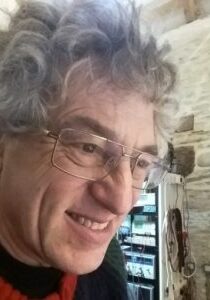
Chris Woolf FIPS

EC Member

Chris's background involves a conventional BBC Tech Ops training followed by 30 years of much less conventional experience including sound supervision, location sound, and studio engineering and design. He currently runs Broadcast Engineering Systems Ltd. and provides many customers, including Rycote Microphone Windshields, with technical support, design and consultancy.

^ top

Louise Willcox MIPS

Director

During 26 years in the BBC Pebble Mill Audio Unit Louise worked on every type of programme including radio drama (The Archers) and radio OBs (Choral Evensong),  TV drama and live daytime TV music shows (Pebble Mill) and live day-time series (Really Useful Show and Housecall). Her post production credits include factual series such as Coast and Countryfile and TV dramas including Howard’s Way and Doctors. Freelance since 2006, Louise has continued to be the Sound Supervisor on BBC 2’s Springwatch, was at the faders of Big Cat Live in Kenya, and mixes BBC 1’s Question Time and The Big Questions for Arqiva Outside Broadcasts when the need arises.  Louise is now 30 years old in the industry, and still enjoying it!


 ^ top

Secretariat

Malcolm Johnson MIPS

Company Secretary

As a lad after repairing his grandmother's original crystal set and building various radios and hi-fi amplifiers, Malcolm decided that sound was going to be his "thing". Following school and college he started work as a laboratory technician doing speech research in a branch of the UK's Government Communications HQ. An advert in the Radio Times then led to a 35 year career in the BBC, starting in radio at Bush House, then to television at the Television Centre in Shepherd's Bush culminating in six years in TV Outside Broadcasts as head of the sound department. On leaving the BBC Malcolm became a broadcast consultant to Sennheiser UK Ltd for three years before establishing the IPS's Secretariat which he has run since 2001.

^ top

John Grove MIPS

IBSNET Administrator

Starting in Hospital Radio John began his career in 1975 with BBC Radio and later with Granada on "Coronation Street". He turned freelance in 1987 and now the majority of his work is documentaries, ranging from Rhino poaching in East Africa, a series on Sicilian Mafia, and the BAFTA-winning "Summer on the Estate". Most notably he worked with the famous photographer Terence Donovan for 12 years on nearly a hundred commercials, and the Robert Palmer videos.
His skills range from fast-action documentary sound, live TV and mixing 70-piece orchestras.

^ top

Simon Jones BMus (Tonmeister), MIPS

 Training Coordinator

Simon is a graduate of the highly acclaimed 'Tonmeister' Music & Sound Recording degree course at Surrey University, and greatly enjoys recording and editing live musical performances. However, the majority of his work is either location recording with small units or as part of a larger team operating Outside Broadcast facilities for major sporting and entertainment events. He was appointed to the new post of Training Coordinator in 2006.

^ top


Fellows

^ top

Hugh BarkerHugh Barker FIPS

Hugh joined BBC Television in 1954 at the Lime Grove studios to work as a Sound Supervisor, working mainly for the Light Entertainment department with such legendary producers as Yvonne Littlewood and Stewart Morris, which gave him, as he says, the privilege of working with world class artistes and orchestras, including series with Vera Lynn, Rolf Harris, Shirley Bassey, Petula Clark, Cilla Black and Nana Mouskouri and guests such as Bing Crosby, Danny Kaye, Eartha Kitt and many others. While the BBC Television music studio was closed for refurbishment Hugh worked for several months in many of London’s major commercial studios, including Lansdowne, CTS, Olympic and Abbey Road, recording music for BBC drama and sitcom programmes. He retired from the BBC in 1992. more


^ top

Ray DolbyRay Dolby FIPS

Ray Dolby was mainly responsible for the development of the electronic aspects of the Ampex videotape recording system in the early 1950s. In 1957 he left Ampex to study at Cambridge University in England, from where he received a PhD degree in physics in 1961, and was elected a Fellow of Pembroke College (Honorary Fellow, 1983). During his last year at Cambridge, he was also a consultant to the United Kingdom Atomic Energy Authority. Ray established Dolby Laboratories in London in 1965, and in 1976 he moved to San Francisco, where his company established further offices, laboratories, and manufacturing facilities. He holds more than 50 US patents, and has written papers on videotape recording, long wavelength X-ray analysis, and noise reduction.
 

^ top

Vivienne DyerVivienne Dyer FIPS

Vivienne built Rycote from a small UK company into a ubiquitous world-leading professional audio brand. She instigated important changes and radical improvements to the development, design, manufacturing, and marketing of Rycote's range of microphone mounts and windshields, and won a technical OSCAR (jointly with her designer) in 2000 for the Modular microphone mount and windshield system. Viv has been a consistent supporter of "the business", offering financial and other backup to many - the IBS through sponsorship, the NTFS through equipment donations for industry training, and to women in film and TV through financial gifts to individual students. In 2001 Viv instigated the Microphone Data Book project, which has now become a much respected and much used website and an encyclopaedic fount of knowledge about microphones, old, current, and new.
 

^ top

Ron GodwynRon Godwyn FIPS

After a long and distinguished career as an engineering manager in the recording industry Ron joined Link House Publications in Croydon as a part time proof reader for Studio Sound and soon moved to become assistant editor of Broadcast Systems Engineering magazine with editor David Kirk. After 18 months Kirk left and Ron was appointed editor, running the magazine until 1988 when he was offered the editorship of Line Up. At Line Up Ron quickly established a reputation for fairness and accurate reporting and soon endeared himself to the people in the industry. He continued to attend international trade shows where he was a popular figure and made many new friends, both for himself, the IBS and LineUp, finally retiring in 2000 after twelve years editing our journal.
 

^ top

Graham HainesGraham Haines FIPS

Graham joined the BBC from university and moved into BBC TV Outside Broadcasts in 1964, quickly establishing an enviable reputation for music balancing. His work has included Grand Opera from Covent Garden and innumerable Promenade Concerts as well as many important musical productions from significant locations around the world, and just about every major State occasion whether from Westminster Abbey or St Paul's Cathedral. Graham was in the forefront of developing stereo sound techniques for television long before the UK's public service started. A direct result from this pioneering work was the famous GLITS stereo tone system, which was devised by Graham: Graham's Line Identification Tone System.
 

^ top

Adrian KerridgeAdrian Kerridge FIPS

When he retired as Chairman of the Lansdowne group of studios in May 2010, Adrian had, he told the IBS, been 58 years in the business, starting by sweeping up dog-ends at IBC Studios. His connection with broadcasting began in the 1950s when he went touring the UK on behalf of Radio Luxembourg to record interviews for Bob Danvers-Walker, assisted by Joe Meek, and the connection continued throughout his National Service when he worked for BFBS, the British Forces Broadcasting Service. During this period, IBC jazz producer Denis Preston decided to set up his own studio, and founded Lansdowne Studios in 1958 with Joe Meek. Adrian joined the new company on January 1st 1959, and when Joe left after a row with Denis, Adrian took over the operation of the studio. The rest, as they say, is history! More.
 

^ top

Harold KutscherauerHarold Kutscherauer FIPS

After being discharged from the RAF on medical grounds in February 1943, Harold (always known as "Kutsch") joined the BBC in 1944 as an engineer in London Control Room, and then moved to Radio Outside Broadcasts, where he found himself balancing many of the famous dance bands of those early days such as Carroll Gibbons, Sidney Lipton, Edmundo Ros and Eric Winstone. He worked on both the VE and VJ celebrations in 1945, and later on almost every type of outside broadcast from the Nine Lessons and Carols from King's College Cambridge to the Queen's Silver Jubilee and the Queen Mother's 80th Birthday. More.
 

^ top

David MearesDavid Meares FIPS

David Meares graduated from Salford University and joined the BBC's Research Department in 1968. In 1972 he began to work on sound and acoustics, leading the BBC's team over the following five years on quadraphony. In 1977 David was promoted to Head of Sound Section with additional responsibilities including studio digital audio developments. Then in the late 1980s and early 1990s, going full circle, surround sound was again under debate and David was once more deeply involved, within the BBC and within international bodies such as the ITU-R, the EBU and the Moving Pictures Expert Group (MPEG). In 1997 following a number of departmental reorganisations David took up the post of Head of Studio Group, combining the aural and visual aspects of programme production. In 2006 David retired from the BBC but has maintained his involvement in audio and broadcast matters through consultancy contracts. More.
 

^ top

Mick SawaguchiMick Sawaguchi FIPS

Mick (Masaki) Sawaguchi became one of the earliest overseas members of the Institute of Broadcast Sound when he joined during an exchange visit between NHK and the BBC in 1991. By this time he was already a highly respected figure, both within NHK and in the Audio Engineering Society, having been an officer in the Japanese section since 1989. Mick worked as a sound designer and mixer in the NHK Drama Production group for 35 years, retiring as a Director of the Production Operations Centre of NHK’s Broadcast Engineering Department in 2005. His outstanding work as a mixing engineer was recognised by the award of several prizes for Best Sound in Television Drama Programmes in Japan at the annual Festivals of Art in 1986, 1990 and 1996. More
 

^ top

Chris Woolf photoChris Woolf FIPS

Chris grew up in London, where his father worked in theatre and publishing. He decided at the last minute not to become a doctor, but instead to apply for BBC technical training at Evesham. He cut his teeth as a cameraman on shows like Top of the Pops, and filmed acts such as Jimi Hendrix and The Who. He met his first wife, Linda, at a film festival in Wales.

A move to Yorkshire brought a short stint working as an AV technician at Hull University, before moving to Cornwall in 1978. He quickly found freelance work as a broadcast technician at Westward TV (which became TSW), which included an incident involving an alligator, that had been kept calm whilst at a cool temperature, but warmed up somewhat under the studio lights. He redesigned and maintained all the broadcast suites at TSW, eventually forming Chris Woolf Broadcast Systems, where he worked as an expert consultant, equipment designer and maintainer. CWBS blossomed quickly into an essential resource for many jobbing production teams in the UK, but also offered services to local farmers mending combine harvesters, and even fixing kit for Westland helicopters, another local company.

In the 1990s Chris started a regular working partnership with Rycote Ltd, and Vivienne Dyer. Chris became their senior technical and design consultant, bringing innovation and more modern production techniques to almost all of their products. With Viv, he won a technical OSCAR for the Modular Microphone Mounting system in 2000. He also designed to 'Lyre' system, which has been adopted into all of Rycote's microphone suspensions, and patented worldwide.

Chris was an instigator of the Microphone Database, which has become an industry wide resource of information and data on everything to do with Microphones.

More recently, Chris has done design work with various companies on compact mixing consoles, and also with Gekko Technology Ltd on their innovative range of LED film and TV lighting fixtures.

Throughout all of this, Chris has been a friend, advisor, champion, supporter, and generally good influence upon the IBS. He has been invaluable in helping to guide the IBS through a difficult time, and helping to move us towards a more stable structure.

More than any of this, Chris gave us all the memorable word, referred to often by so many IBS members.... that word is 'plesiochronus'!!

The IPS are proud that Chris will be the first Fellow of the Institute of Professional Sound, our first 'FIPS'.